Finding a place to rent in Ghana can feel like a full-time job. You scroll through endless WhatsApp groups, chase agents who go quiet the moment you ask a real question, travel across town for an inspection that turns out to be nothing like the photos, and then get hit with an advance demand that swallows your savings.
It shouldn’t be this hard — and it doesn’t have to be. This guide walks you through exactly how to rent a home in Ghana the smart way, so you protect your money, your time, and your peace of mind.
Nothing surprises first-time renters in Ghana more than the advance payment. So let’s be honest about it.
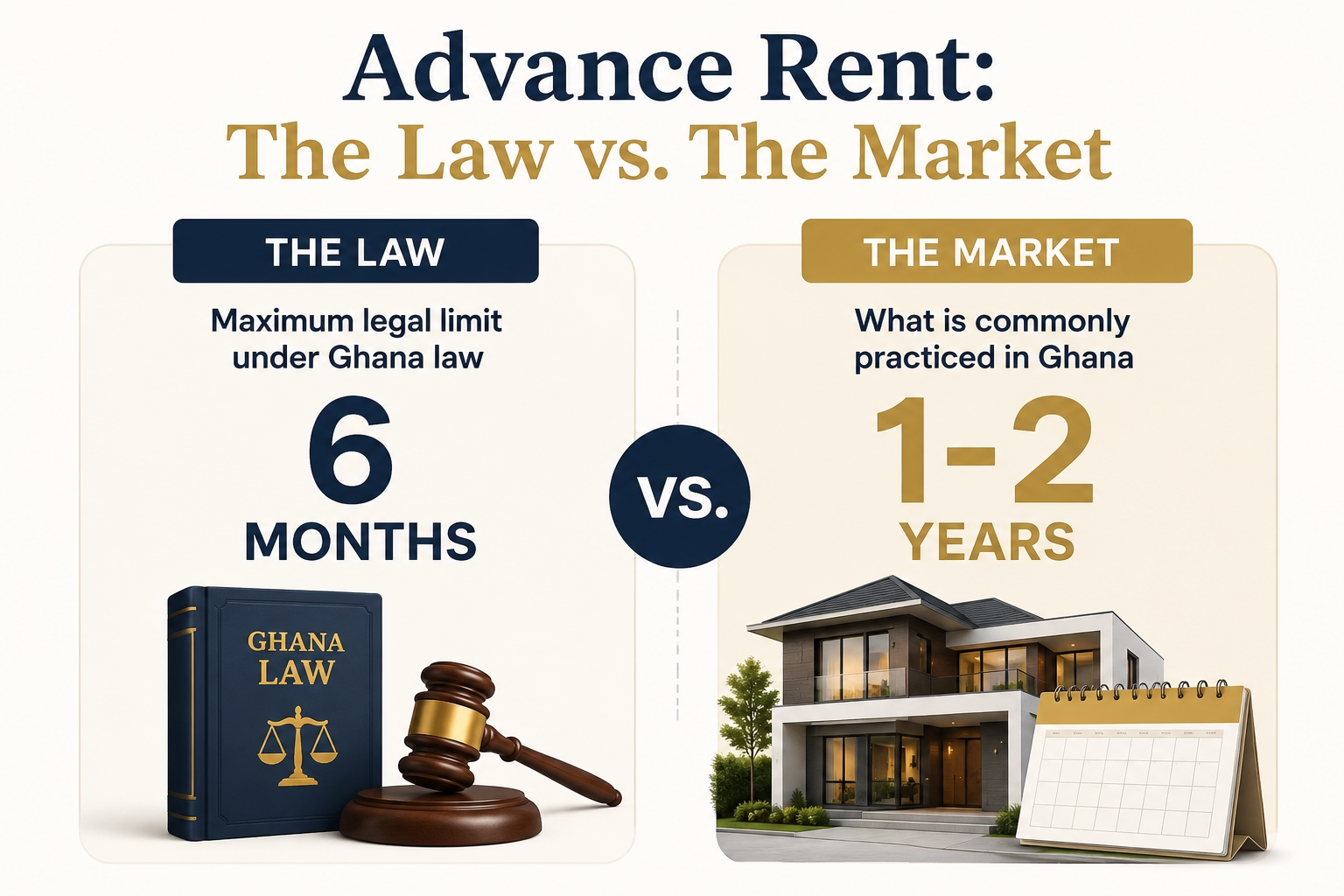
By law, landlords are not allowed to demand huge upfront payments. The Rent Act, 1963 (Act 220) caps advance rent at six months for long-term tenancies and one to two months for short-term arrangements. Demanding more than that is technically a breach of the law.
In practice, though, the market tells a different story. Research from CISA shows the average tenant in Ghana pays close to two years’ rent upfront, even though the law caps long-term residential advances at six months. In premium areas, the gap is even wider — East Legon, Airport Residential, and Cantonments routinely ask for two to three years upfront, often in US dollars.
There is movement to fix this. A proposed Rent Bill has sat before Parliament since March 2023, and it would cap advance rent at a maximum of one year, make monthly payment a default option for new tenancies, and replace the Rent Control Department with a Ghana Rent Authority backed by a digital complaints portal. President Mahama has urged tenants to report offending landlords to the Rent Court and pledged to fast-track the Bill. But here’s the key thing to know: the Bill had not passed as of mid-2026, so the Rent Act 1963 still governs every signed tenancy.
What this means for you: budget realistically for the area you want, know that you’re legally within your rights to push back on excessive demands, and keep proof of everything you pay.
The monthly rent figure is never the full story. Before you fall in love with a place, add up the real cost of moving in:
A house that looks affordable on paper can become a financial trap once these are stacked together. Knowing your true number protects you from saying yes to something you’ll regret in month three.
This is where most renting nightmares begin. Ghana’s rental space has plenty of honest professionals, but it also has its share of “land guards,” fake agents, and people renting out properties they don’t actually control.
Protect yourself with a few non-negotiable checks:
Working with a credible agency removes most of this risk in one step — because the verification has already been done for you.
Photos lie. Always inspect in person, ideally during the day, and run through this checklist:
If the agent rushes you or won’t let you inspect properly, treat it as a red flag.
A handshake is not a tenancy. Get everything in writing: the rent amount, the advance period, the responsibilities of each party, notice periods, and the conditions for getting your deposit back.
You should also ask for a Rent Card. Under the current enforcement drive, the rent card is now mandatory, and tenants are advised to always request one. It’s your official record of payments and a real layer of protection if a dispute ever arises.
You have more protection than you might think:
Knowing these rights changes how you negotiate. You’re not begging for a favour — you’re entering a fair, lawful agreement.

Everything above is doable on your own — but it’s a lot. The searching, the verifying, the chasing, the negotiating. That’s exactly why Bizimodation exists.
We help you rent the right place faster, with people you can trust:
Real estate in Ghana shouldn’t be this hard. With Bizimodation, it isn’t.
WhatsApp us today on (+233) 55 554 4986 or tell us what you’re looking for and let us bring the right options to you.
Real Estate, Made Easy.
We simplify real estate. From initial consultation to closing day, we guide you through every step with clarity and ease.
WhatsApp us